
At the forefront of biotechnology, Synomebio has always been driven by innovation, committed to delivering breakthrough solutions to the global biotechnology sector. Today, we are pleased to announce that two of the company's key patents, “α-L-Fucosidase Mutants and Applications Thereof” and “Highly Salt-Tolerant Single-Stranded DNA-Binding Protein Mutants and Applications Thereof,” have officially been granted. This achievement recognizes the dedication and ingenuity of Synomebio's R&D team and marks an important milestone in the company's continued advancement in biotechnology.
Patent 1:α-L-Fucosidase Mutants
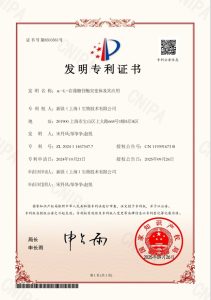
Enhancing the Performance of 2′-FL Test Kits for Precise Nutritional Assessment in Infants
2′-Fucosyllactose (2′-FL) is a key component of human milk oligosaccharides (HMOs), and its content is an important indicator for assessing how closely infant formula resembles breast milk. α-L-Fucosidase is a key enzyme used in 2′-FL test kits, and its activity and stability directly determine the accuracy and reliability of test results.
Technical Highlights:
- 1. Four engineered mutants (AFUCO2–AFUCO5) were developed through multi-site mutagenesis.
- 2. AFUCO5 delivers up to 33% higher reaction rates, reducing testing time.
- 3. Improved enzyme stability extends kit shelf life and ensures more consistent, reliable results.
Application Prospects:
As core enzyme raw materials, these mutants can significantly improve the sensitivity, precision, and lot-to-lot consistency of 2′-FL test kits, providing the dairy industry and testing institutions with more accurate and reliable tools for product quality control and nutritional assessment.
Patent 2: Highly Salt-Tolerant Single-Stranded DNA-Binding Protein Mutants
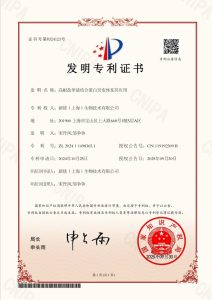
Overcoming Salt Concentration Limitations and Expanding Applications in Nucleic Acid Amplification and Sequencing
Single-stranded DNA-binding proteins (SSBs) are widely used in molecular biology applications such as PCR, sequencing, and reverse transcription. However, wild-type SSBs are prone to inactivation under high-salt conditions, limiting their range of applications.
Technical Highlights:
- 1. Two salt-tolerant mutants, SSBV1 and SSBV2, were developed through targeted mutations and deletion.
- 2. Both mutants maintain superior binding activity and stability under high-salt conditions.
- 3. They enhance nucleic acid amplification and sequencing signals while reducing background interference.
Application Prospects:
These mutants are suitable for applications such as qPCR, NGS library preparation, and site-directed mutagenesis under high-salt conditions. They are particularly well suited for sequencing platforms such as Illumina, helping improve detection sensitivity and stability and advance molecular diagnostics and genetic testing technologies.
About Synomebio
Synomebio (Shanghai) Co., Ltd. focuses on synthetic biology and enzyme engineering, developing efficient and stable enzyme and protein tools for industries including food, pharmaceuticals, and testing. The granting of these two patents further strengthens the company's technological advantages in enzyme design and protein engineering.
We look forward to collaborating with partners across industries to jointly advance innovation and applications in biotechnology across a wider range of fields!
 English
 Chinese